
Carter County Parole Versus Probation
Parole and probation both permit a person to live in the community under rules, but they begin in different ways. Oklahoma Department of Corrections describes probation as court-ordered supervision tied to a suspended sentence under 22 O.S. §991A. The court, not the jail, creates that obligation. Parole is a conditional release for the balance of a prison term. It suspends continued confinement while leaving the original sentence in force. A parole violation can result in a return to prison.
Those distinctions explain why a person can be released from an institution without being fully discharged. A probationer may never have served an ODOC prison term. A parolee has left prison but remains within the state supervision system. Someone whose sentence has ended is in a different position. Search results and records should retain the precise terms used by ODOC and the court.
| Feature | Probation | Parole |
|---|---|---|
| Who authorizes it | The sentencing court | The parole process, with the PPB role set by the case type and law |
| When it applies | Often with a suspended sentence or other court disposition | After release from an ODOC prison term |
| Who supervises | ODOC community supervision when assigned | ODOC community supervision |
| Best public trail | Court docket plus ODOC status | PPB decision, ODOC status, then release and supervision records |
| How it ends | Court or agency record showing completion or discharge | ODOC record showing discharge from the remaining sentence |
- Parole
- Conditional community release while part of a prison sentence remains.
- Probation
- Court-ordered community supervision, often connected to a suspended sentence.
- Discharge
- The recorded end of custody or supervision, depending on the agency record.
- Absconder
- A person whom a supervising authority alleges has stopped reporting or cannot be located.
Verify Carter County Post-Release Supervision
Begin with the exact person, not a broad name match. Full name, name variants, date of birth or age, Carter County case number, and ODOC number help prevent a false match. The ODOC offender search covers people sentenced to or supervised by ODOC. It is not an archive for every person once booked at Carter County Jail.
Use a matched sequence because no single public page answers every supervision question. ODOC warns that its public data are abbreviated. A court docket explains the sentence, while the ODOC entry may show the present location or supervision status. Private conditions, reporting dates, and appointment details may not be open to a general caller.
- Search ODOC by the most specific name or number available. Compare the ODOC number, age or date details, photo, offenses, and Carter County court information shown.
- Read the current status and location terms exactly. A community or parole label differs from a prison location, a fugitive label, or a final discharge.
- Search the Carter County case in OSCN. Read the judgment, suspended sentence, revocation, warrant, and completion events together.
- Use the current ODOC office locator to identify the supervising office. Ask for the proper public-record or routing channel, not confidential conditions.
- For parole, check the Oklahoma Pardon and Parole Board decision trail, then confirm that the decision was implemented through ODOC and an actual release record.
The broader Carter County release-record chain is detailed on the released-inmate search and records home page. It helps when the question begins with a vanished county jail card rather than a known ODOC record.
Carter County Supervision Office Details
ODOC’s current office locator assigns both Carter and Love Counties to its Ardmore Probation and Parole Office. This is a community-supervision office, not a jail and not a place to search for a local booking. The office may route a records or agency question, but publication of its contact details does not mean staff can disclose an individual’s private terms.
The current ODOC probation and parole locator is the controlling source for the address below. An older ODOC attachment lists another Ardmore street address while using the same phone number. Call first before traveling.
ODOC Ardmore Probation and Parole Office119 Stanley SW
Ardmore, OK 73401
580-223-6350
Serves Carter and Love Counties
The ODOC locator screenshot shows where the live office row appears:
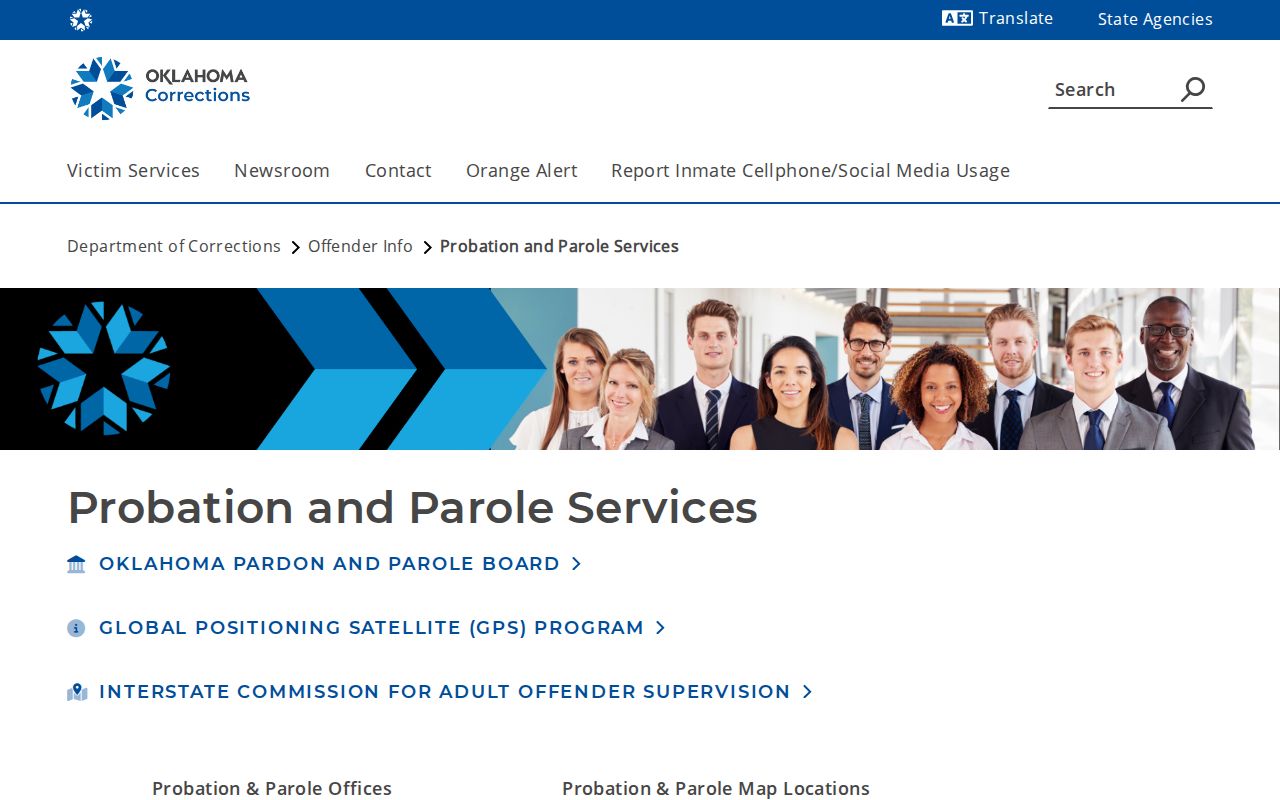
The office row links Carter County supervision questions to Ardmore, while the live page resolves the conflicting older address.
Note: Confirm the Ardmore address by phone before a visit because an older ODOC document identifies a different street location.
Carter County Parole Decision Records
The Oklahoma Pardon and Parole Board and ODOC perform separate work. PPB publishes meeting information, dockets, and results. ODOC holds the offender record, carries out institutional processing, and supervises parole in the community. PPB also directs requests for offender records to ODOC and conviction records to the county court clerk.
Read the result language carefully. A matter may be granted, recommended, passed, or denied. PPB can grant parole in a nonviolent case within its authority, while a favorable violent-offense recommendation may require action by the Governor. A passed matter remains pending for later consideration. Even a grant or approved recommendation must be followed by administrative processing and an actual custody event.
Hearing timing comes from the current PPB Board Meetings calendar, not a fixed weekday assumption. Meetings are generally monthly, but the dates, multi-day schedule, agenda, online access details, and correspondence deadlines vary. Dockets are commonly posted ahead of consideration under agency policy. A hearing date marks review only. It should never be copied into a Carter County release record as the date of discharge.
The PPB dockets and results page organizes decision records by month and year:
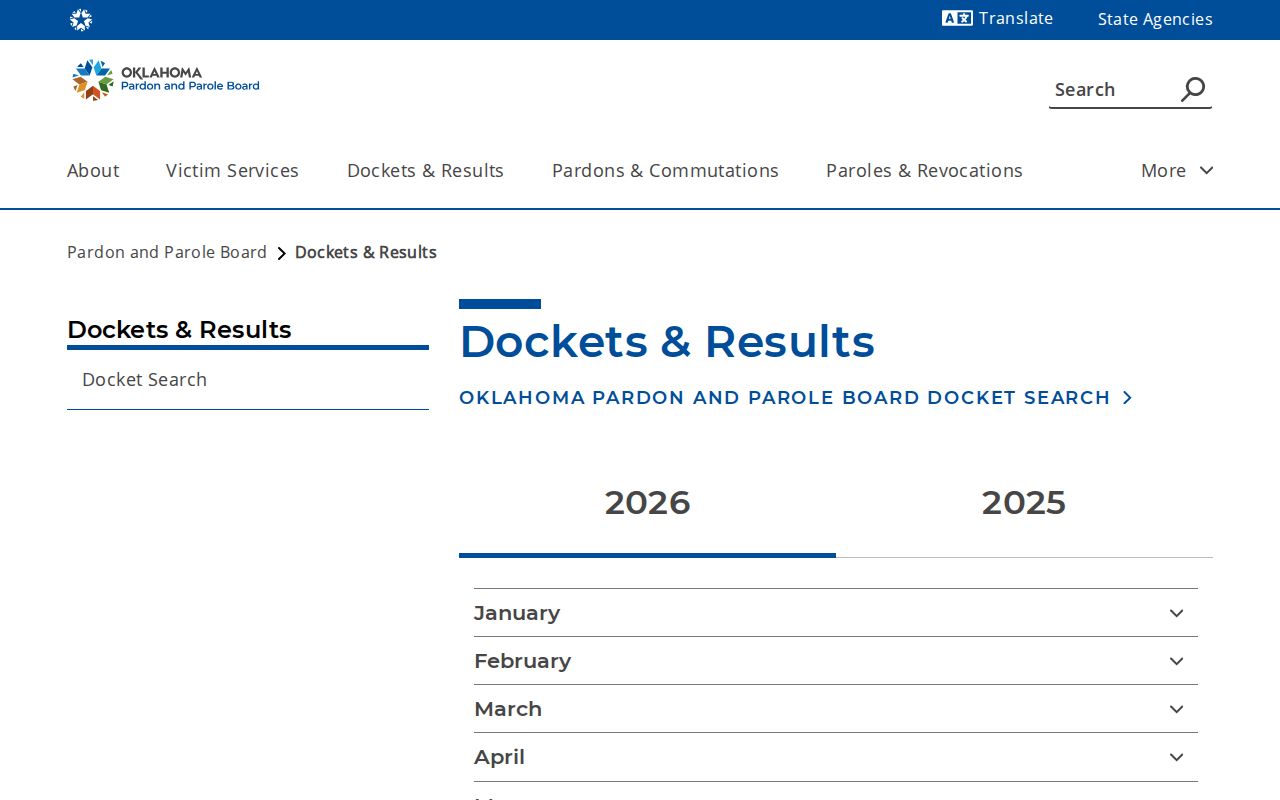
A posted result can support the decision trail, but ODOC status, VINE, and the implemented discharge record must confirm what happened afterward.
Carter County Supervision Warrants
An absconder or fugitive label is not a completed release or a clean end to supervision. It means an authority is seeking the person. ODOC provides a Fugitives route, and the Carter County Sheriff maintains a separate Most Wanted page. Each serves a wanted-person function rather than a general parole or probation lookup.
Never infer that a prior sentence ended because a wanted entry appears, and never try to approach or detain a listed person. ODOC identifies its Fugitive Warrants Division at 405-425-2570 or 405-425-2571, toll-free 866-363-1119, and warrants@doc.ok.gov. Immediate safety concerns belong with law enforcement.
A warrant may arise after a person was physically released, yet it changes how the current status should be described. Compare the warrant entry with the ODOC record and Carter County docket. A later revocation can place the person back in custody. Keep the initial release, the alleged violation, the warrant, and any later return as separate events.
Note: A wanted listing is a safety and status record, not proof that Carter County parole or probation has ended.
Carter County Supervision Status Changes
Supervision conditions may address reporting, travel, treatment, fees, or other court and agency requirements, but the research does not establish one universal condition set. Terms depend on the judgment, parole action, and individual plan. The public docket may show a revocation filing or order. ODOC controls its supervision record. Neither source should be expanded into claims about a private appointment or restriction that is not displayed.
Oklahoma VINE can give a custody-change lead for an exact person. Notifications may include release, transfer, escape, apprehension, and death. A transfer means custody continues elsewhere. Ordinary VINE registration also differs from PPB’s formal written victim-notification process and does not register a person for parole-hearing notices.
Carter County’s sheriff recommends VINE when someone no longer appears on the active roster. Still, VINE is not a certified discharge document, and statewide availability does not guarantee that each Carter County event is current. Confirm a county jail event through the jail register. Confirm a prison or supervision event through ODOC records.
Carter County Supervision Discharge
Physical release and supervision discharge can occur years apart. Leaving Carter County Jail ends one local custody event. Leaving an ODOC prison on parole ends institutional confinement but begins or continues community supervision. Final discharge requires an agency or court record showing that the applicable obligation ended.
For probation, review the Carter County docket for completion, termination, revocation, or an amended order, then obtain an official record from the court clerk when formal proof is needed. For parole, use ODOC status and history. If the public result is unclear, ODOC Legal Services provides its open-record channel, and ODOC lists osordischarges@doc.ok.gov for discharge-only questions. A PPB result remains part of the decision history rather than the final discharge record.
Different custodians can overlap. A county jail discharge can be a transfer to ODOC, another county, USMS, or ICE. It does not show release to the community. Likewise, completion of one Carter County case does not resolve another hold. The record should name the authority and event instead of reducing them all to “released.”
- County discharge
- The Carter County jail-register endpoint, which may be a community release or a transfer.
- Institutional release
- Departure from ODOC prison, sometimes into parole or another form of supervision.
- Supervision discharge
- The later end of the state or court supervision obligation.
- Actual release
- The implemented physical custody event, confirmed by the responsible jail or corrections agency.