
Carter County Projected Versus Actual Release
Oklahoma uses “projected release date,” often shortened to PRD, for an ODOC estimate. The Oklahoma Pardon and Parole Board defines it as an estimated prison-release date that can move earlier or later with credits, programs, and misconduct. PPB does not calculate the date. ODOC maintains the sentence and credit record that produces the estimate.
An actual release date records an event that has happened. For Carter County Jail, the jail register’s date or manner of discharge supplies the best local endpoint. For an ODOC prisoner, status history or a discharge record is stronger than an old projection. The person may leave prison into parole, transfer to another custodian, or complete the sentence. Those outcomes should not share one label.
- Projected release date
- An ODOC estimate subject to recalculation.
- Parole eligibility date
- The first point at which review may occur, not an exit date.
- Transfer date
- The end of one facility’s hold while custody continues elsewhere.
- Discharge date
- The recorded custody or sentence endpoint shown by the responsible agency.
Find Carter County Projected Release Dates
First decide which agency holds the person. The Carter County Sheriff’s roster is an active-only county jail view updated hourly. It may show a person awaiting trial, serving a local sentence, or waiting for transfer. It does not publish a future-date calculator or a released archive. The ODOC offender search applies only after a person enters the state correctional or supervision system.
Use full name and variants, date of birth or age, Carter County case number, booking number, and ODOC number when known. Verify the identity across the source fields before treating a displayed date as belonging to the right person.
- Check the Carter County active roster to learn whether the person is still held locally. No card is not proof of release because transfer can also remove the card.
- Read the Carter County court docket. A pending case, bond order, judgment, sentence, amendment, revocation, or another hold can determine which agency has the next record.
- If the court committed the person to ODOC, accept the public-search disclaimer and search by name or ODOC number. Read any projected date exactly as displayed.
- For a local jail sentence, ask Carter County Jail how its record applied the judgment and jail credit. Request the jail-register date and manner of discharge after release.
- Check VINE for a custody-change lead, then obtain the responsible agency’s record for actual release. Do not turn a transfer alert into a community-release claim.
The Carter County released-inmate search path adds the county jail-register request and court reconciliation needed when a person has already disappeared from the roster.
Carter County ODOC Release-Date Records
ODOC policy says its public lookup may show offense data, a projected release date, a photograph, and related information. Exact labels and availability depend on the live record. The search also warns that results are abbreviated and are not an exact account of the offense, sentence, or time to be served. Never infer a missing PRD from the sentence length.
Use the ODOC result as a state record, not as a Carter County jail archive. Someone released on bond from a county misdemeanor may never appear. In the other direction, someone who left Carter County Jail after an ODOC commitment may still be incarcerated at reception or another state prison.
| Field to compare | Why it matters |
|---|---|
| ODOC number | Distinguishes people with similar names. |
| Name and age details | Supports an identity match before a date is reported. |
| Photo | Can support identity, subject to current availability. |
| Offense and county | Connects the state record to the Carter County case. |
| Location or status | Separates prison, community supervision, fugitive status, and discharge. |
| Projected date | A provisional field only when the live record displays it. |
The direct ODOC search begins with the agency disclaimer:
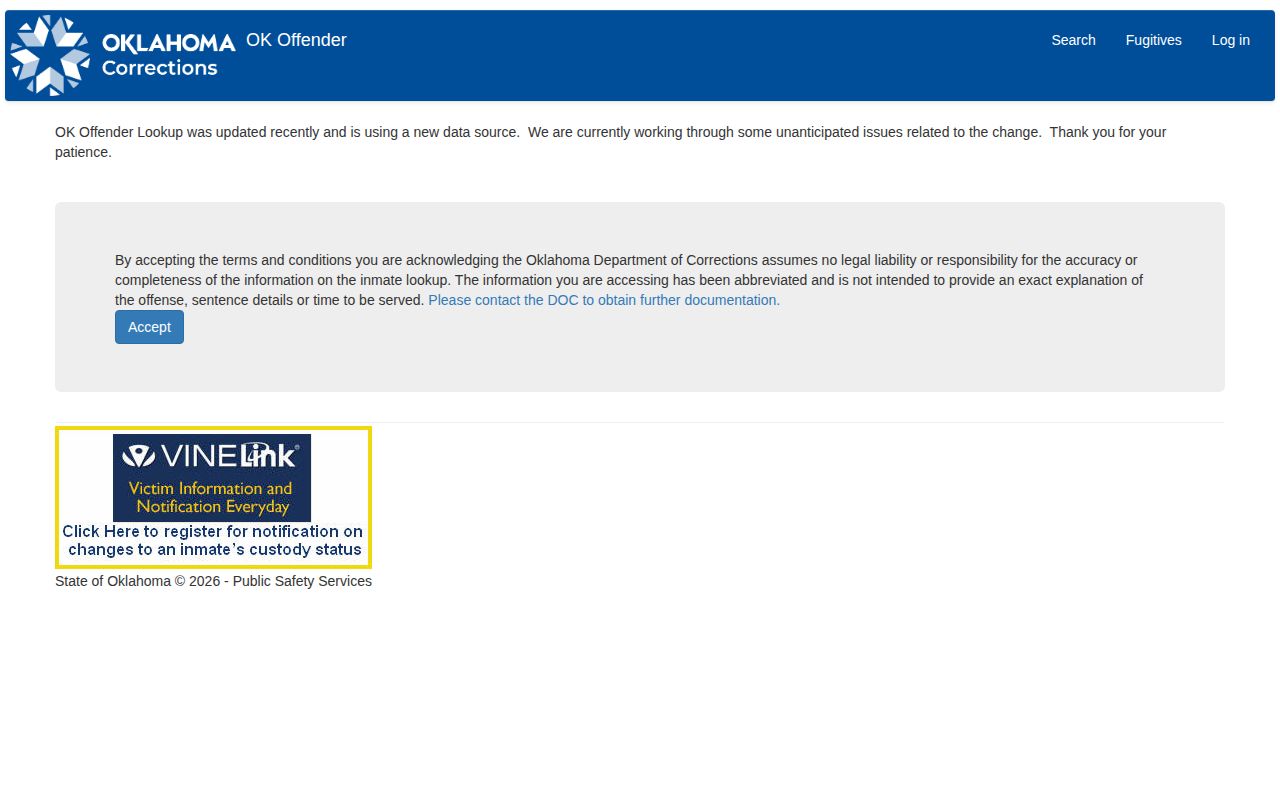
The disclaimer is part of the lookup because a public result cannot replace ODOC’s full sentence or discharge record.
Carter County Release-Date Computation Limits
ODOC calls a future discharge date tentative. Earned-credit level, misconduct, achievement credits, and sentence administration can change it. The state’s earned-credit system uses levels 1 through 4, with higher levels generally linked to better credit status. Title 57 §138 and ODOC policy govern credits, awards, losses, and possible restoration.
Lost credits may be considered for restoration under §138(C), but restoration is not guaranteed. Consecutive sentences, concurrent sentences, jail credit, amendments, and disciplinary changes also prevent simple calendar math. An estimate copied months ago may no longer match the current agency calculation.
County time is a separate issue. No Carter County-specific online calculator or verified local good-time formula was found. Ask the jail how its record applied the court judgment, jail credit, and any authorized credits. Then compare the court sentence and obtain the date or manner of discharge. ODOC prison rules should not be applied mechanically to a Carter County jail sentence.
Note: Carter County research found no verified local weekend-release formula, so only the jail and court record should control that calculation.
Carter County 85 Percent Release Rule
Title 21 O.S. §13.1 is an offense-specific rule, not a statewide rule for every Oklahoma sentence. It lists offenses for which a person must serve at least 85 percent before parole consideration, and credits cannot reduce confinement below the statutory minimum. The controlling conviction and statute must be checked.
Reaching that minimum does not guarantee release. It may make a person eligible for parole review under the governing rules, but eligibility, a PPB hearing, a decision, administrative processing, and actual discharge are distinct steps. Other sentences, detainers, and decisions can still affect the date.
For cases outside §13.1, PPB’s public material discusses a general one-third eligibility framework for many nonviolent cases, subject to statutes and exclusions. That is also not a release-date formula. A person can reach review eligibility and remain in custody after a denial or pass.
Carter County Release Dates Can Change
A projected date reflects facts known to ODOC at a point in time. Credits can accrue or be lost, the court can modify the sentence, another authority can lodge a hold, and parole processing can alter the path out of an institution. The latest official record controls over a saved screenshot or an informal calculation.
| Factor | Possible effect | Confirm with |
|---|---|---|
| Earned or achievement credits | May move the projection earlier within the governing rules | ODOC sentence administration record |
| Misconduct or nonperformance | May cause credit loss and move the projection later | Current ODOC calculation |
| Credit restoration | May adjust the estimate, but is not an entitlement | ODOC record under §138 |
| Concurrent or consecutive terms | Changes how multiple terms interact | Judgment and ODOC sentence record |
| Court amendment | Can change sentence length or credit treatment | Carter County court order |
| Other hold or detainer | Can prevent release to the community or cause transfer | Holding and receiving agencies |
| Parole action | Can create a conditional release path but not an instant exit | PPB result and ODOC implementation |
Carter County Parole Is Not Discharge
The Oklahoma Pardon and Parole Board schedules and decides parole matters, while ODOC calculates the projected release date, manages the offender record, carries out release processing, and supervises parole. That agency split matters. A PPB docket date is only a date for consideration. A result may grant, recommend, pass, or deny the matter.
For a violent-offense case, a favorable PPB recommendation can still require action by the Governor. For a nonviolent case, a Board grant still requires implementation. Neither document proves the prison gate event. After a favorable action, read the ODOC status, check VINE, and obtain the state discharge or release record.
The ODOC Offender Info page explains the tentative-date and supervision distinctions:
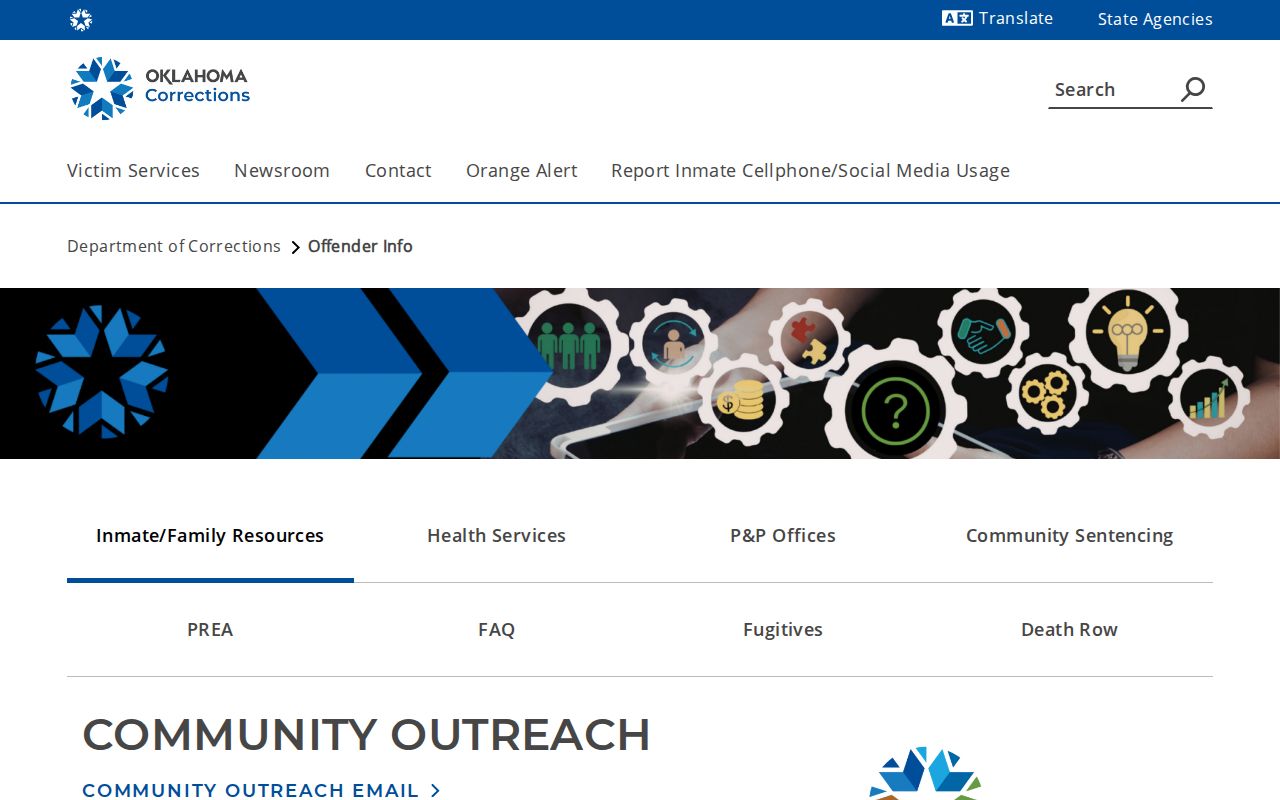
The agency guidance keeps a projected date separate from parole eligibility, a Board decision, and completed discharge.
Carter County Exact-Date Access Limits
ODOC says the exact future release date of a particular current inmate is confidential unless the requester has a legitimate need. It gives judicial and law-enforcement needs as examples. The inmate receives days remaining each month and may ask a correctional records officer or case manager or choose to share the information.
A public ODOC result may still display a projected date. Treat it as the provisional field that ODOC published, not permission to demand nonpublic precision. Victims with release concerns may contact ODOC Victim Services at 405-425-2607 or victim.services@doc.ok.gov. That official channel differs from a broad public inquiry.
No date shown online does not justify reverse calculation. It may reflect confidentiality, the stage of intake, a data limit, or another agency’s custody. Use the court and corrections records that match the person’s actual status.
Confirm Carter County Actual Release Dates
For Carter County Jail, request the jail-register entry that states date or manner of discharge under 51 O.S. §24A.8. The sheriff records page directs callers to 580-223-6014 during normal weekday business hours to obtain its form. It publishes a $5 report fee and a pickup rule at 100 S. Washington in Ardmore, while noting that some material can be emailed and some requires subpoena. Confirm the method before traveling.
For an ODOC release, use status history and the agency’s discharge record. ODOC Legal Services lists an open-record path and osordischarges@doc.ok.gov for discharge-only inquiries. For parole, add the PPB decision record but do not substitute it for ODOC implementation. For a federal or immigration hold, the Carter County record proves only the county handoff. BOP, ICE, USMS, or the actual receiving custodian controls the later endpoint.
VINE can provide a rapid release or transfer alert for a matched person. It is not a certified release ledger. Release and transfer are different events, and Carter County feed freshness must be checked in the interface. The VINE Inmate Check explains how to match the reporting agency and register for an alert.
A final claim should name the event and source: released on bond from Carter County Jail, transferred from Carter County to ODOC, released from prison onto parole, or discharged by ODOC. Precision prevents a future estimate from being mistaken for an actual release.
Note: A court order explains legal authority, but the jail or ODOC record confirms when the physical release process was completed.